For an increasing number of investors, real estate is no longer limited to opportunities within the Netherlands. Not because the Dutch market has lacked strength in the past, but because the rules of the game have changed significantly in recent years. Higher taxes, stricter rental regulations and a growing lack of predictability have led many people to question whether investing in property locally is still the most efficient option.
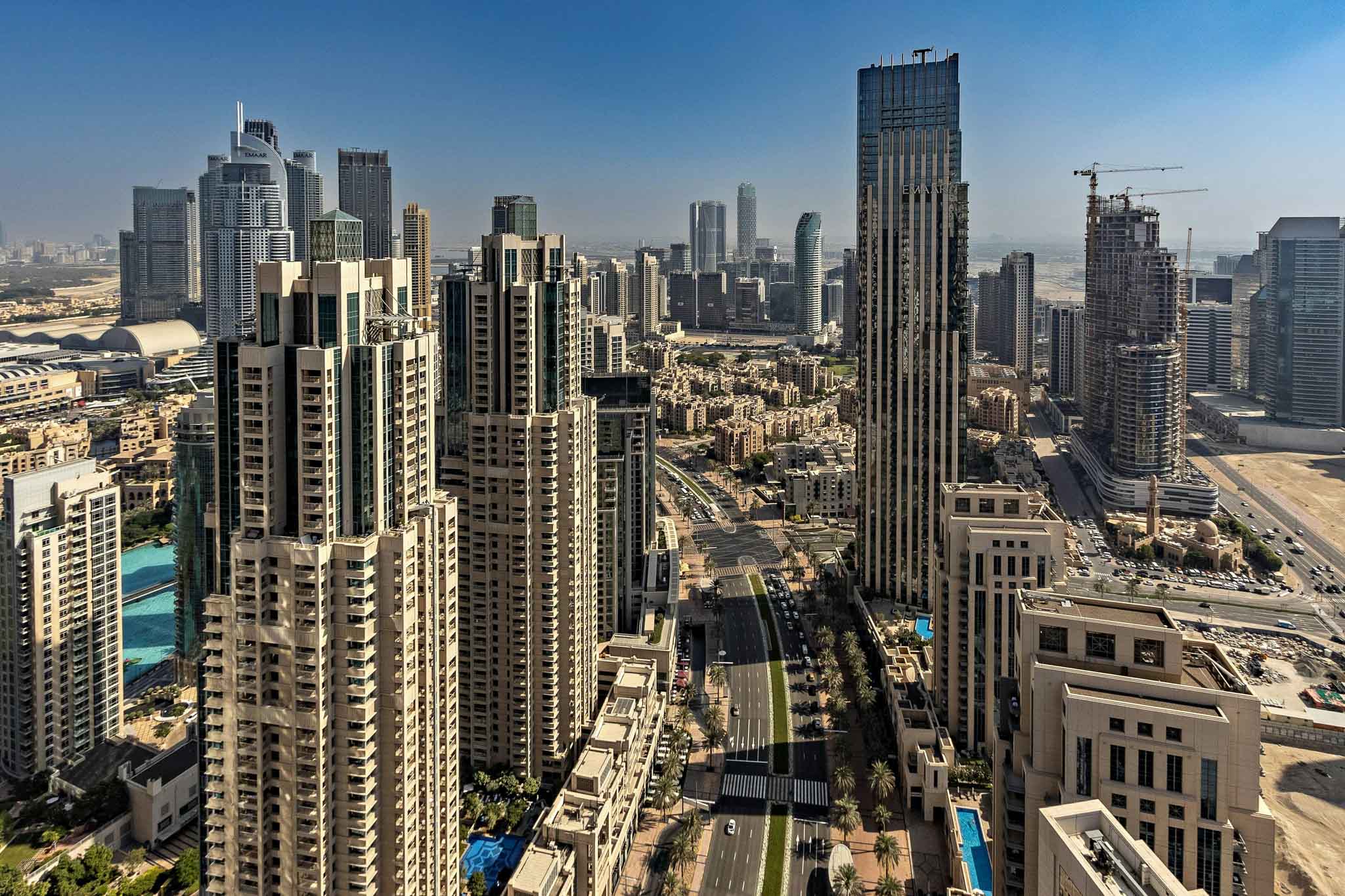
In that search, Dubai appears more and more often. Not as a short-term trend, but as a serious investment market that has developed over the past two decades into a mature and internationally regulated environment. For Dutch investors considering investing in property in Dubai, or purchasing real estate as a diversification of their portfolio, it is mainly the combination of stability, clear regulations and long-term growth potential that makes the market appealing.
In this guide, we explain in a clear and transparent way how buying and investing in property in Dubai works in 2026. We walk you through the purchasing process, costs, potential returns and the key considerations, so you can decide, based on insight and realistic expectations, whether this market suits your situation.
Why more Dutch investors are looking at Dubai
Interest in Dubai rarely stems from a single reason. In most conversations with investors, it is the result of several factors coming together. Many Dutch investors are not necessarily done with real estate, but they are increasingly uncomfortable with the uncertainty surrounding it. Regulations change frequently, and fiscal pressure makes it harder to form a clear picture of long-term returns and risks. More information on the new Box-3 regulations is available here.
Dubai offers a different starting point. Not because there are fewer rules, but because the rules are clearly defined and consistently applied. Rental income is not taxed, and property is not subject to a wealth tax as it is in the Netherlands. This makes it easier to plan ahead and to calculate investment scenarios realistically, without having to account for sudden policy changes.
Growth also plays an important role. Dubai continues to attract expats, entrepreneurs and international companies. This ongoing inflow creates a structural demand for housing for end users and for rental purposes. With the Dubai 2040 Urban Master Plan, the government is investing heavily in infrastructure, liveability, and new residential areas. As a result, many Dutch investors view Dubai not as a short-term opportunity, but as a market with a clear long-term vision.
What types of property can you buy in Dubai?
As a foreign buyer, you can purchase property in Dubai within designated freehold zones. These are specific areas where foreigners can obtain full ownership of a property. This is not leasehold or a temporary right of use, but full ownership registered with the Dubai Land Department.
In practice, most Dutch investors opt for apartments. They are relatively low-maintenance and align well with demand from expats and professionals. Villas and townhouses are also available, but they usually require a different approach. They tend to suit families or investors with a longer investment horizon and a greater focus on personal use or long-term rental.
There is also an important distinction between existing properties and new developments. Each option has its own characteristics and risks. The best choice depends largely on your objective: immediate rental income, long-term capital growth, or a combination of both.
Buying off-plan property: how does it work?
Off-plan purchases play a central role in Dubai’s real estate market. Unlike many European countries, new construction is not scarce here, but rather a key driver of urban development. Developers often launch projects early, allowing buyers to secure a property before construction is completed.
For Dutch investors, this can initially feel unfamiliar. You are, after all, purchasing a property that does not yet physically exist. In Dubai, however, this confidence is supported by regulation and oversight. Payments are made through escrow accounts and are only released once predefined construction milestones are met. This prevents developers from freely accessing funds before actual progress is made.
Off-plan purchases also offer financial flexibility. Instead of making a single large investment, payments are spread over the construction period. This allows investors to allocate capital more efficiently and to build their investment gradually. At the same time, off-plan buying requires careful consideration of location and a realistic time horizon. Not every project suits every investment strategy.
The purchasing process step by step
The buying process in Dubai is clear and structured, but the exact steps can vary depending on the type of purchase. Not every transaction involves an Expression of Interest (EOI).
After the initial orientation and determining the budget, a specific property or unit is selected. In certain projects, particularly during new launches with limited availability, an EOI is submitted first. This formally registers interest and provides priority during the unit allocation process.
When purchasing from existing inventory, an EOI is often not required. In these cases, the unit is reserved directly by paying a down payment, usually between 10% and 20%, depending on the project and developer.
Once the unit is reserved, a booking form is signed. This document confirms the selected unit, purchase price and payment plan. Only after the booking stage does the Sales & Purchase Agreement (SPA) follow. The SPA is the formal contract that sets out all legal and financial terms, including the payment structure and the expected completion date.
All payments are made according to the agreed schedule and are registered with the Dubai Land Department, ensuring transparency and legal certainty throughout the entire purchasing process.
What costs should you take into account?
In addition to the purchase price, there are additional costs to consider. These include registration fees with the Dubai Land Department and annual service charges for building maintenance and shared facilities. There is also a 4% DLD fee, which can be roughly compared to transfer tax in the Netherlands.
What many Dutch investors appreciate is that these costs are clear from the outset. There are no hidden taxes or complex structures introduced later. This transparency makes it easier to perform realistic calculations and to align the investment with your financial situation.
No mortgage, but structure
In Dubai, new developments often use interest-free payment plans. Instead of a traditional mortgage, the purchase price is paid in instalments: an initial payment at purchase, several instalments during construction, and often a final payment upon completion.
This structure lowers the entry threshold and provides flexibility. For many Dutch investors, this feels fundamentally different from investing at home, as it reduces dependency on banks and interest rates. At the same time, it requires planning and discipline, as payment obligations must be clearly understood in advance.
How safe is buying property in Dubai?
Safety is a decisive factor for many Dutch investors, and Dubai has invested heavily in this area. Escrow accounts ensure that payments are not made directly to the developer but are managed under regulatory supervision. Funds are only released when construction milestones are achieved.
In addition, RERA oversees the real estate market, while the Dubai Land Department registers all transactions and property ownership. This creates a system in which buyers are well protected, provided the process is followed carefully and reliable parties are involved.
Renting out property in Dubai
Most investors purchase property in Dubai with rental income in mind. Long-term rentals are popular among expats working in the city, while short-term rentals cater to tourism and business travellers and can be attractive in certain locations.
The most suitable strategy depends largely on the neighbourhood, the type of property and applicable regulations. Not every area is suitable for short-term rentals, and permits play an important role. Making these considerations upfront helps prevent expectations based on unrealistic assumptions.
What can property in Dubai realistically yield in 2026?
Returns on property in Dubai vary significantly by location and property type. Studios and one-bedroom apartments are popular due to broad rental demand, while larger properties are more often purchased for personal use or specific target groups. This difference has a direct impact on rental performance and overall stability.
It is important not to view returns in isolation from risk and predictability. A higher expected return does not automatically mean a better investment. Factors such as location, target audience, service charges and rental strategy often play a more decisive role than the purchase price alone.
Dubai offers attractive opportunities, but no guarantees. Investors who base their assumptions on realistic rental levels, carefully assess location and adopt a long-term perspective significantly increase the likelihood of stable and consistent results.
discover dubai
- Why investors choose Dubai
- The future vision explained
- Key numbers about Dubai
"*" indicates required fields
Buying property in Dubai from abroad
The entire purchasing process can be managed from abroad. Contracts can be signed digitally, and payments are made via international transfers. In some cases, a power of attorney is used.
For many investors, this significantly lowers the barrier to entry, as physical presence is not required to start the process.
Common mistakes when buying property in Dubai
What we often see in practice is that investors place too much emphasis on the purchase price. A lower entry price may seem attractive, but it says little about the quality of an investment. Location and rental demand are ultimately far more important for long-term stability and returns.
Additional costs are also frequently underestimated. Service charges vary by building and can affect net results. Regulations and permits, particularly for short-term rentals, are sometimes considered too late in the decision-making process.
Most mistakes, however, do not stem from the market itself, but from acting too quickly without sufficient preparation. Investors who take the time to understand the process and base decisions on context rather than assumptions avoid most pitfalls.
Is Dubai still an attractive market in 2026?
Dubai is not a market for short-term gains. It is particularly appealing to investors who look ahead and value stability and structure. The city’s attractiveness is not based solely on its tax environment, but also on how the real estate market is organised and regulated. This provides clarity, especially when compared to markets where regulations change frequently.
What sets Dubai apart is that growth is not coincidental, but the result of long-term planning. Large-scale investments in infrastructure, housing quality and economic diversification are deliberately made to keep the city liveable and attractive. As a result, demand for property is driven less by short-term trends and more by sustainable, underlying needs.
As long as this approach continues, demand for housing is expected to remain strong. For investors who make deliberate choices regarding location, property type and investment horizon, Dubai can still be a logical and relevant market to enter in 2026.
Final thoughts
Buying property in Dubai can be a valuable addition to a real estate portfolio, provided it aligns with your personal goals and financial situation. It is not an all-or-nothing decision, but a considered choice where insight and preparation are key.
Reliable information, realistic expectations and a clear strategy make all the difference. Investors who understand the market and make decisions with a long-term perspective increase their chances of achieving stable and sustainable results.
If you are exploring opportunities in Dubai and would like to discuss your situation in more detail, a short introductory conversation can provide clarity.
This allows you to assess the possibilities, risks and next steps without any obligation.