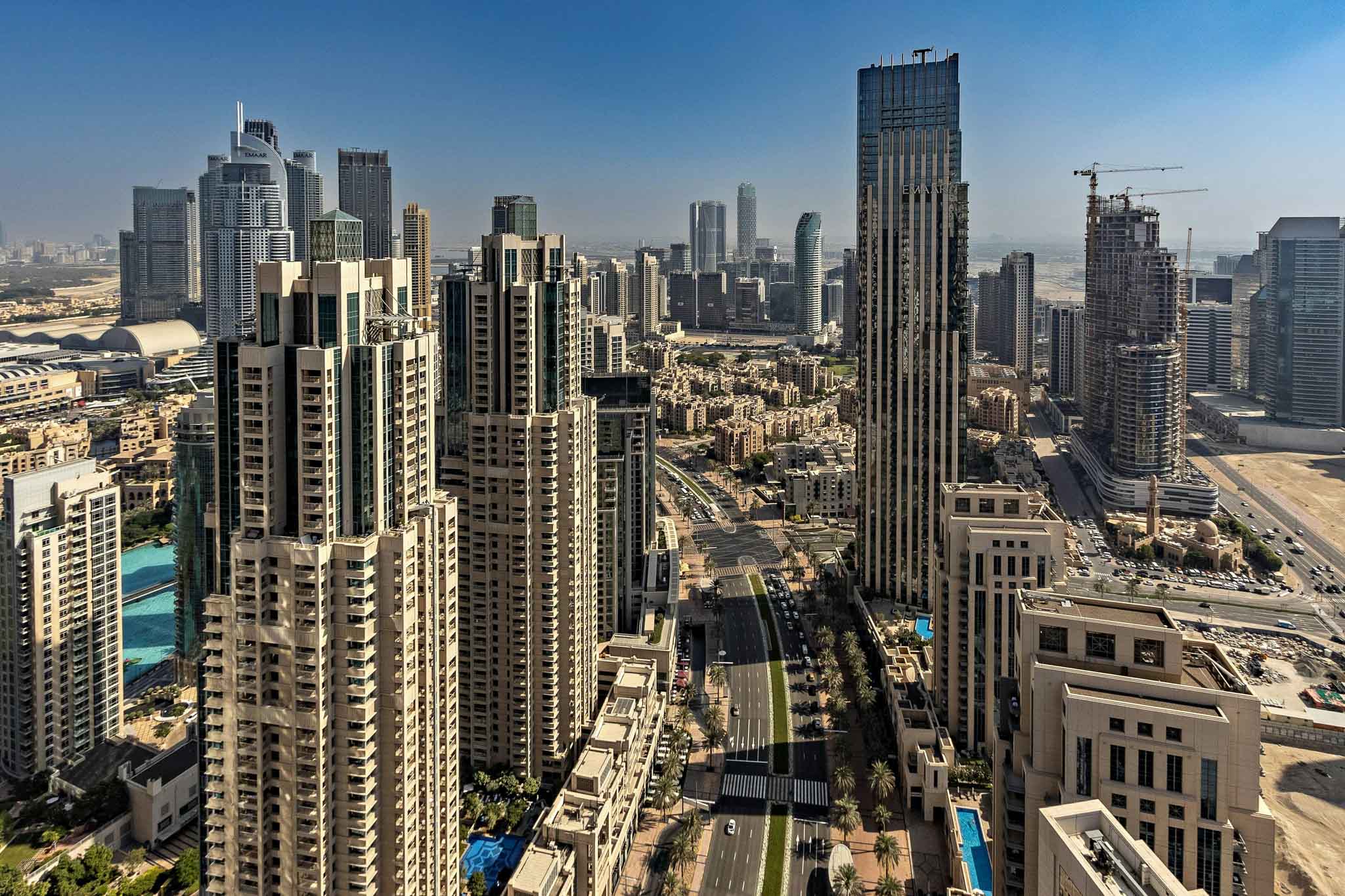
Anyone seriously considering real estate in Dubai will quickly look at purchase prices, rental income, and expected capital appreciation. In practice, however, the total cost goes beyond what you pay at the time of transfer. Service charges, maintenance and other recurring expenses continue on an annual basis.
Anyone buying property in Dubai should therefore aim to gain insight into the total cost of owning a property in Dubai, and take this into account when comparing different projects and areas.
Service charges are not an additional or “hidden” cost, but a standard part of owning real estate in Dubai. They vary by building, area, and property type. Buyers and investors who understand these costs upfront can compare projects more realistically and avoid unpleasant surprises later on.
In this blog, we explain what service charges are, how they are structured, why they differ, and what investors and buyers should realistically consider.
What are service charges in Dubai?
Service charges are annual fees paid by every property owner in Dubai for the maintenance and management of shared facilities. These charges are assessed on a per-building or per-community basis and are mandatory for all owners.
Unlike in many European countries, where maintenance costs are often arranged individually, most services in Dubai are organised collectively. This includes cleaning, security, elevators, swimming pools and the general upkeep of the building or neighbourhood. Service charges ensure that these facilities are maintained to an appropriate standard.
It is essential to understand that service charges are not set directly by the government. They are determined by the building owner or community, usually in cooperation with a property management company, and are subsequently registered and approved by the Dubai Land Department (DLD).
This oversight is part of Dubai’s broader real estate regulatory framework, which aims to ensure transparency and protect property owners.
What do service charges consist of?
The exact breakdown varies by project, but service charges typically include several recurring components. For apartments in Dubai, these typically include the maintenance of common areas such as entrances, elevators, and parking garages. Security, concierge services, and cleaning are also usually included.
Facilities such as swimming pools, gyms, and shared lounges are also included in the calculation. The more extensive the amenities, the higher the service charges tend to be. In larger communities, additional costs may apply for landscaping, lighting of common areas, and overall management.
A portion of the service charges is often reserved for future maintenance. This helps prevent owners from facing large, unexpected one-off expenses later on.
How are service charges calculated?
In Dubai, service charges are typically calculated based on the property size, measured in square metres or square feet. As a result, larger properties generally incur higher annual costs than smaller units within the same building.
The service charge rate per square metre depends on several factors, including the building type, project age, finish quality, and the level of facilities provided. A modern building with extensive amenities naturally requires more ongoing maintenance than a simpler complex.
For villas in Dubai, the structure is different. Service charges are often lower or limited to community fees because the owner is responsible for maintaining the property. Within villa communities, owners typically contribute to shared facilities, security, and landscaping.
Differences per property type
The impact of service charges varies significantly by property type. Apartments typically have the highest service charges because most facilities are shared. Elevators, reception areas, swimming pools, and gyms all contribute to higher annual costs, particularly in luxury high-rise developments.
Penthouses are structured the same way as apartments, but because of their larger size and often more exclusive features, total service charges are usually higher. This is not necessarily a drawback, provided the costs align with expected rental income or personal use.
Townhouses typically fall between apartments and villas in service charges. There is less shared infrastructure than in high-rise buildings, but more than in fully detached properties. Familiar roads, landscaping, and security within the community are usually included.
Villas typically have the lowest service charges, but owners are fully responsible for maintaining the property. This shifts costs from fixed to variable, which some investors prefer for flexibility.
Differences per area in Dubai
Location also plays an important role. In central areas with dense high-rise developments and extensive facilities, service charges are generally higher than in more residential neighbourhoods.
In areas such as Business Bay, where modern apartment complexes with a wide range of amenities are common, service charges tend to be above average. In return, rental demand is often intense and consistent.
In more family-oriented areas such as Dubai Hills Estate, service charges are typically lower per square metre, especially for villas and townhouses. Facilities prioritize liveability over luxury amenities.
In areas like Jumeirah Village Circle, there is often a balance between affordability and available facilities, making it easier to align service charges with a stable net return.
These differences are particularly relevant for investors focused on long-term rentals in Dubai, where fixed annual costs play a larger role in overall returns than with short-term rental strategies.
discover dubai
- Why investors choose Dubai
- The future vision explained
- Key numbers about Dubai
"*" indicates required fields
What do service charges mean for your return?
Service charges directly affect the net return on real estate in Dubai. A property with high gross rental income may become less attractive once annual service charges are deducted, compared to a property with slightly lower rent but a more efficient cost structure.
For this reason, it is essential to evaluate returns not only as percentages but in relation to recurring costs such as service charges. Investors who consistently factor these expenses into their calculations gain a more realistic picture of actual performance.
Common misconceptions about service charges
A common misconception is that service charges are roughly the same everywhere. In reality, they can vary significantly per building, even within the same area. Another assumption is that new developments automatically have low service charges. In practice, newly built projects with extensive facilities can be more expensive to maintain.
For villas, some buyers assume there are no service charges. While they are generally lower, community fees still apply, and owners remain responsible for property maintenance, making total costs less predictable.
It is also incorrect to assume that service charges remain fixed indefinitely. They are reviewed annually and may increase or decrease depending on maintenance requirements and management decisions.
What should you check before buying?
Gaining clarity on service charges before purchasing is essential. Always ask for the current service charge per square metre and verify whether the figure is provisional or final. In new developments, charges during the first years are sometimes indicative.
Service charges should not be assessed in isolation, but in relation to the property type, available facilities, and intended use. Lower service charges are not automatically better if they result in poorer maintenance or a decline in the building’s overall quality.
When comparing properties across areas or between apartments and villas, service charges should be included in the total cost as a structural expense, not as an afterthought.
Conclusion
Service charges are a standard and essential part of owning real estate in Dubai. They influence net returns and provide insight into the level of maintenance and management within a building or community. Buyers and investors who understand these costs upfront are better positioned to make informed decisions and avoid disappointment.
Service charges are not a reason to invest in Dubai or not to invest, but they do influence where and how an investment is most suitable. Taking them into account in the overall assessment leads to a more realistic understanding of both costs and returns.
For those assessing service charges for a specific project, area, or property type, it is advisable to review them in advance rather than make corrections afterward.